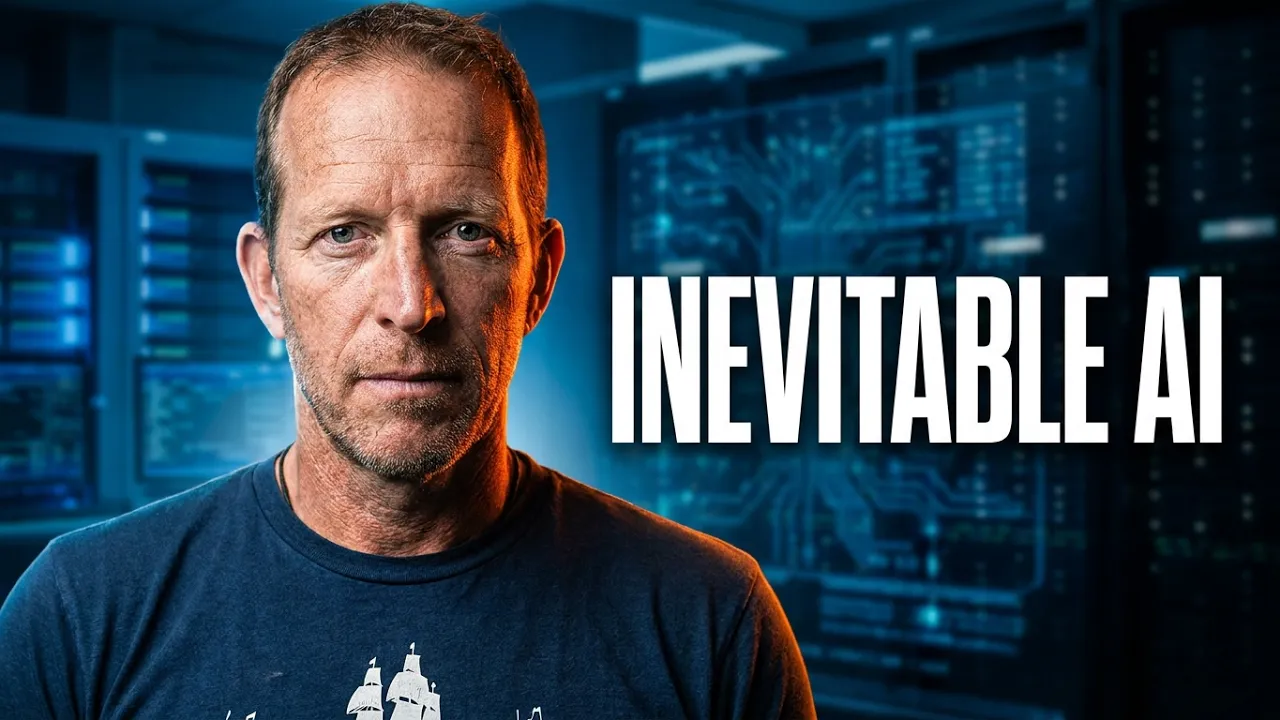
EPISODE NOTES
What happens to software businesses when a small team can build far more than it could before? Nimrod Lehavi, co-founder of Simplex and founder of Inevitable AI Group, joins Ron Gross to discuss a venture studio built around that change, and the work that remains after the code is written.
A change in the economics of building
Nimrod describes a turning point in his experience with AI-assisted coding: tools that had been interesting began to feel capable of changing how software was developed. That led him and his partner to examine established software markets and ask how quickly an AI-native alternative could be built.
The episode presents his thesis, rather than a settled prediction: when the cost and effort of development fall sharply, some of the advantages of existing software companies become easier to challenge. Brand, customers, and distribution still matter, even if a competing product can be created faster.
A venture studio, not a single startup
Inevitable AI Group is organized around launching multiple companies with individual entrepreneurs. Nimrod describes small, AI-first operations where one person can work across development, product, design, marketing, and business tasks, supported by the studio and by other founders.
This is not simply a plan to generate a pile of prototypes. The conversation covers launching products, finding paying customers, learning marketing, and giving an entrepreneur a business to run. The hard part moves from producing code alone to turning that capability into a company.
Feature parity is not the whole business
Ron asks what separates a newly built product from the established company it resembles. Nimrod points to the incumbent's customers and brand, while describing the opportunities he sees in AI-first experiences and lower operating costs.
Those claims are part of the studio's approach at the time of the interview, not independent benchmarks for every product. The broader question is useful for any founder: if the features are easier to reproduce, what will make customers choose, trust, and keep using the new business?
Build with the buyer in mind
The acquisition strategy is part of the product strategy. Nimrod discusses choosing markets and possible buyers early, rather than waiting until a company has grown to ask who might want to acquire it. He sees established companies as potential buyers as well as competitors.
The studio's current public description makes the same distinction: incumbents have valuable advantages, but adapting large systems and organizations can be slow. IAIG aims to build focused products that become useful to those larger platforms. It is a specific venture-building model, not a promise that any AI-generated product will find a buyer.
The person running it still matters
Nimrod is looking for people who genuinely want to be entrepreneurs, not only people who want the title. In the discussion, choosing a project is part of developing that ownership. Founders work alongside one another, see others launch, and can ask the studio for help.
He also talks about the practical skills developers may need to learn, especially marketing. The support is about sharing experience and helping people avoid mistakes, not pretending that a more experienced founder has every answer.
Optimism, risk, and the founder's next role
The episode opens with a disagreement about how to think about AI risk. Nimrod is optimistic about humanity's ability to adapt; Ron raises concerns about the speed of progress and alignment. Those positions remain viewpoints in the conversation, not conclusions the reader is asked to accept.
Later, the discussion returns to delegation and finding someone who wants to run a business. AI changes what a small team can attempt, but motivation, responsibility, customer understanding, and the choice of what to build still belong in the picture. The founder's role may change without becoming irrelevant.
Find a topic in the conversation
Approximate topic starts, checked against the source transcript.