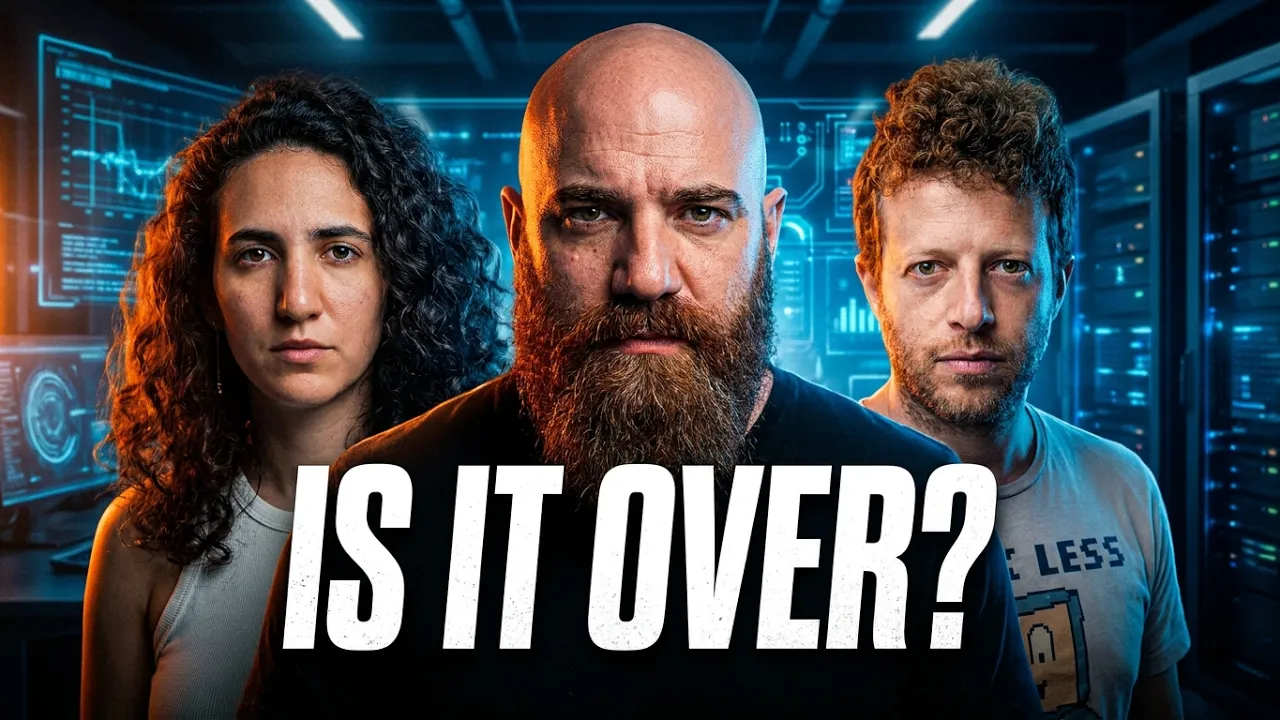
EPISODE NOTES
Sharon, Ron, and Alice open The Last Founder with a question about the people behind companies: if AI can do more of the building, what happens to the founder? Their conversation connects the practical rise of agents with alignment, economic change, and the value of working with other people.
From prompts to systems that do work
The opening discussion follows the move from asking a model a question to giving software agents tasks, combining agents, and imagining more autonomous systems. Those terms can sound interchangeable, but they describe different expectations about what a system does and how much a person has delegated.
The hosts discuss multi-agent systems in everyday terms: several tools or roles working together, rather than one conversation that tries to handle everything. The founder's question is how to make those parts useful as a whole.
An AI system is not a neutral blank slate
The conversation looks at how a model's responses reflect the choices made around its development and operation. The hosts discuss opinionated systems and the limits of assuming that an answer from AI is simply an objective account of the world.
That leads into alignment: how to build systems that behave in ways people actually want, particularly as their capabilities grow. The episode treats this as a question with real stakes, not a technical detail to leave until after deployment.
A disagreement about speed and safety
Ron raises concerns about the pace of AI progress and the difficulty of ensuring that powerful systems follow human values. Sharon questions whether development can be slowed through regulation when the underlying technology can be reproduced across borders.
Their discussion of atoms and electrons is a way of exploring that disagreement. It is not a claim that existing rules do not apply. The tension is between the desire to reduce risk and the practical difficulty of controlling a widely available technology.
What is left of a software company's advantage?
The hosts consider how improvements from large AI providers can change the prospects of smaller software businesses. Capabilities that once supported a separate startup may become part of a general-purpose tool.
The episode asks what a founder should build when the platform beneath the product changes quickly. The relevant question is not only whether something can be coded, but whether it creates value that survives the next change in the tools.
The founder may change rather than disappear
The title of the podcast is deliberately a question. The hosts explore whether founders will become less necessary, whether more people will be able to start things, and how the role might shift toward direction, judgment, and responsibility.
More capable tools can remove work a person does not need to carry. That is different from deciding that people are obsolete. The conversation leaves room for both the power of automation and the choices that still need an owner.
Human connection is part of the work
Ron distinguishes working with an agent from being accountable to another person. A tool can be paused or turned off; a relationship with a person creates a different kind of commitment. Building alone with AI can give someone more power while still leaving them alone.
The closing thread is about building together. The Last Founder starts as a shared learning experiment, not a claim to have settled the future. Its first episode places human connection alongside technical capability, rather than treating connection as something to add after the software is finished.